

The Objects and Us
Materiality and meaning through our relationships with the things that surround us
The angles of sunlight are essential to me. Lately, I have been reflecting on the things I own and what I surround myself with. Over the last few years, I have felt a need to purge my belongings and abandon an old sense of self. I don’t want to be that aging woman attached to things.
As a person who advocates for artists and artisans, my home is full of small works of art across mediums. Aside from the art, I own very utilitarian pieces of furniture and shelves full of books that have moved with me through five apartments across Manhattan and Brooklyn. Many of my most sentimental items are things that I keep at my desk, mementos from various jobs over the years, hard covers from Abrams Books, The Creators Project coffee table book, artist stickers, popsicle art made by my son, a crystal pyramid, an Emma Kohlman print that reads “Like a root our compassion can sprout.”
The exquisite writer Debra Levy wrote a living autobiography to inventory her possessions, real and imagined, and I delighted in following her musings and investigation into understanding her belongings. She writes, “Three bicycles. Seven ghosts. A crumbling apartment block on the hill. Fame. Tenderness. The statue of Peter Pan. Silk. Melancholy. The banana tree. A love story.” The whole book is an examination of the poetics and politics of ownership, especially as a woman. It’s a topic that I am constantly taking stock of, the things I own and why I own them. What do they say about me?
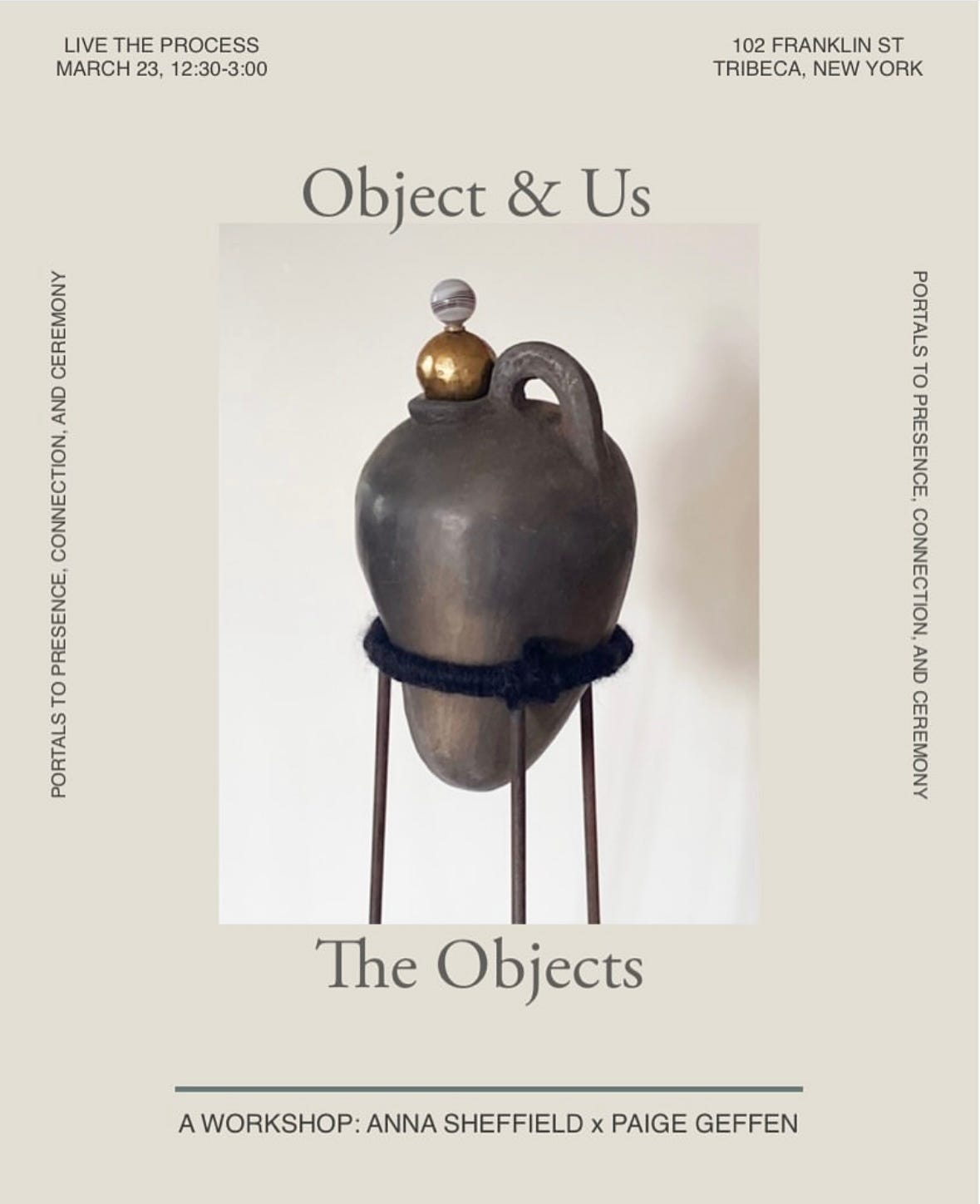
Earlier this year, I felt driven to attend a workshop titled “Object/s & Us” in Tribeca at the beautiful Live the Process studio space, hosted by artist, sculptor, and friend Anna Sheffield and trauma-informed somatic practitioner and interior designer Paige Geffen of Object and Us.
Anna says, “The idea for Object/s & Us emerged with Paige and I talking about the generative and practical qualities of making time for ritual and connection to the divine. And using objects to form that connection.”
The synthesis of Object and Us is to create personal practices around the exploration of objects and space to unearth tools for self-connection. Through guided reflections, Paige helps people connect the exterior with the interior — of beauty and intention, aesthetic and meaning— while integrating the esoteric and somatic. Her homepage reads, “Our objects ask to be held, to be touched, to be played with. They encourage relationships and summon symbiosis.”
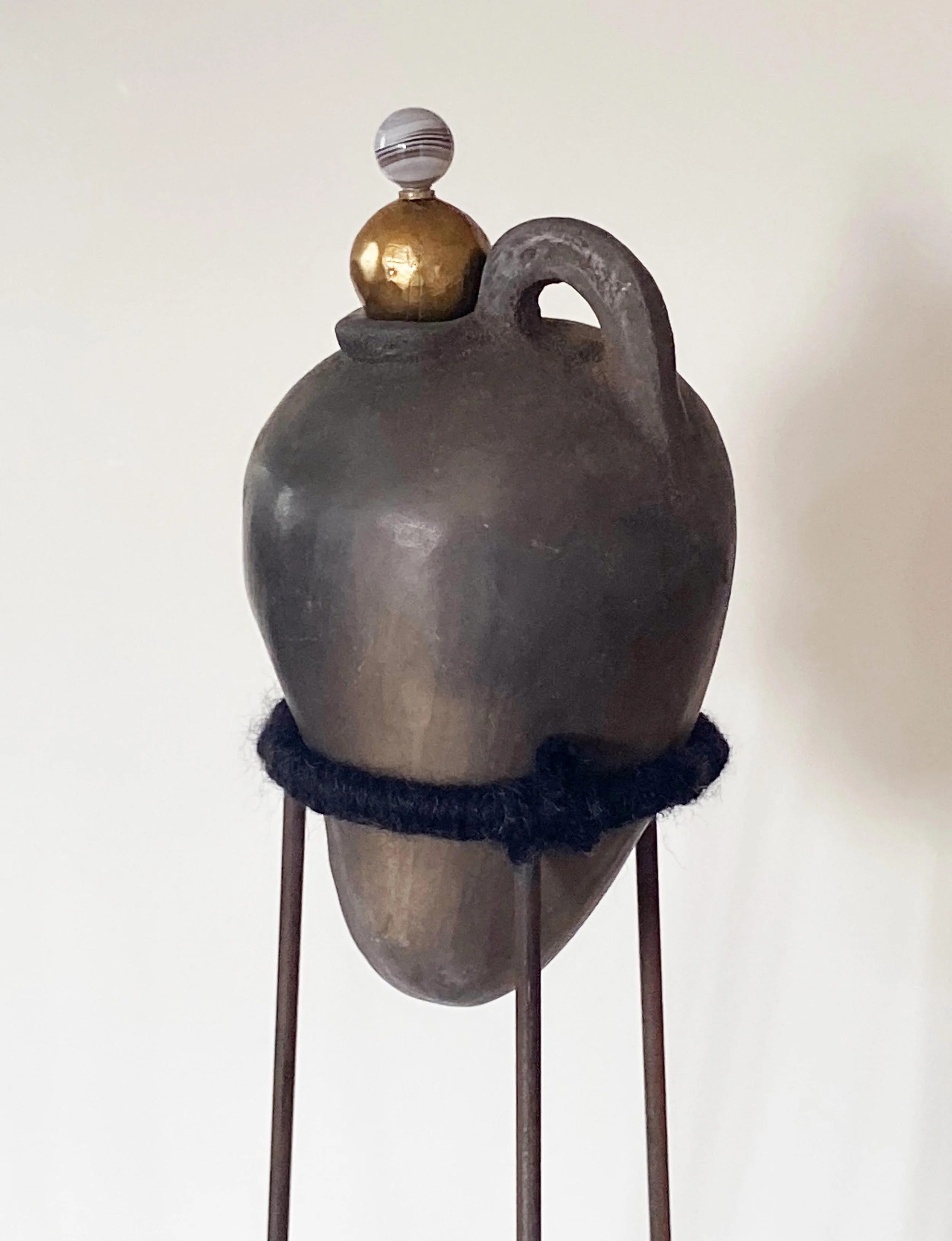
I have been in need of symbiosis in my life. And in reading this I knew I had to join in: to reflect emotively about things I live with, to access memory, to create ceremony for myself. I am an intertextual person—one who finds great pleasure and meaning in how something feels in my hands. I felt compelled to take the workshop because it was an opportunity to study handmade sculptures in clay, bronze, and minerals formed by Anna and her new project titled The Objects.
I’ve been following Anna’s return to crafting things with her hands since she took part in the Pocoapoco residency in Oaxaca, Mexico. The objects come from what she says is “a desire to create more ceremony in my days and to address adding pieces to both remind and make space for them in my home, not just on the altar, but on my desk and workbench, and in places [of] daily ritual, like those of dress and undress.”
These two ladies were speaking my language of intention.
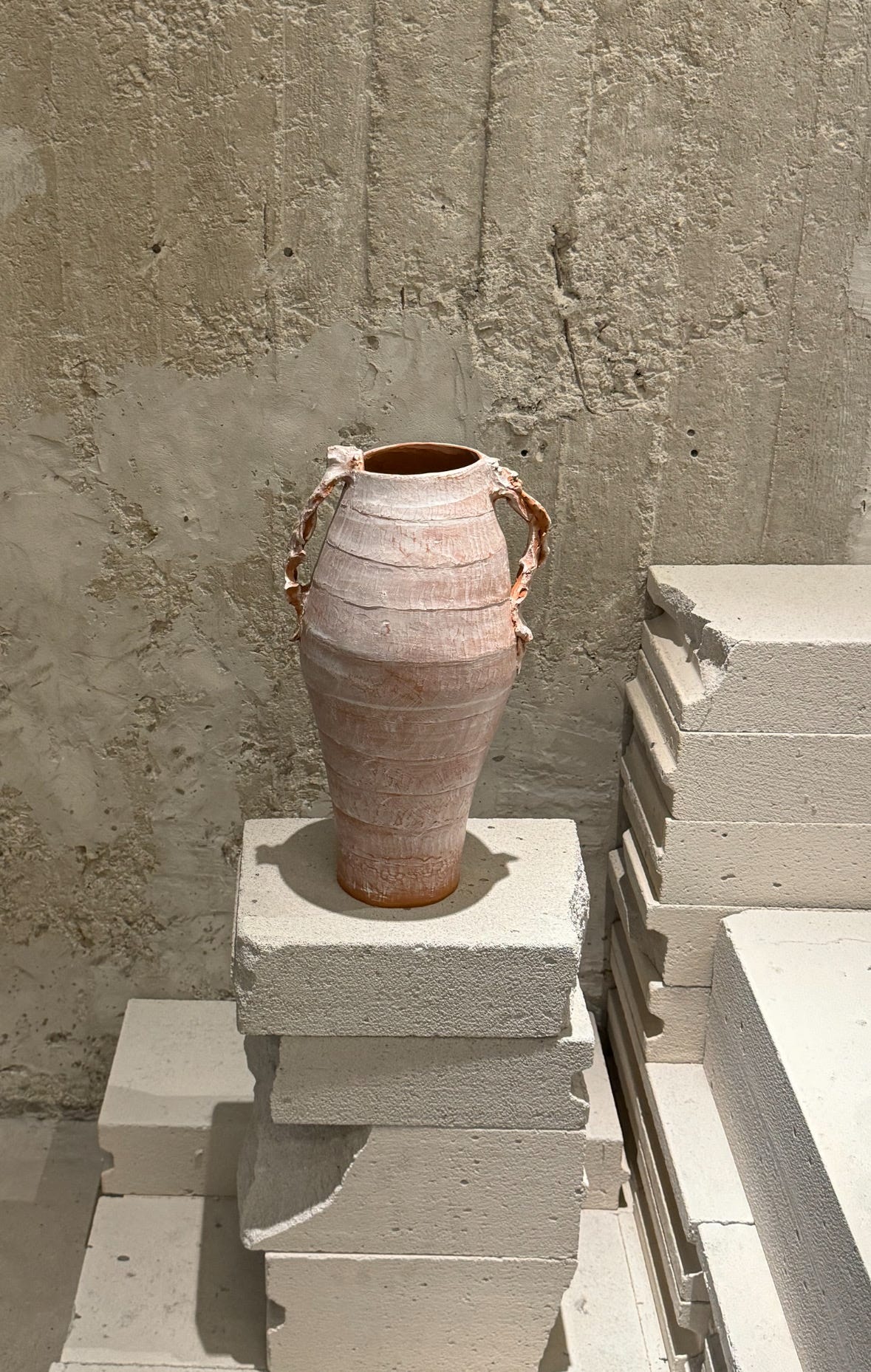
Through guided meditation and journal writing, Anna and Paige invited us to explore memory through texture. Anna placed small sculptural objects made with various materials—ceramic, metal, coral, and stone — across two tables for participants to admire and touch. We were encouraged to explore why we selected the objects and to ponder what about their aesthetic or materiality spoke to us.
I chose a palm-sized earthenware pot that stood on a metal-ring base. I liked the smooth textures, how the pot fit perfectly in my hand, the smallness of it, and the weight of the perfect metal ring base. I liked the shine of the metal against the muted clay—almost an analogy of my brown body adorned with jewelry.
From here, we extended this practice of contemplation into a series of questions posed by Paige that revolved around childhood memories, our current relationship with objects and rituals. “How do your objects serve you?”
The workshop allowed me to rethink my ideas of home through time, it allowed me to unlock new memories and gave me more room to daydream. I remembered a collection of crystals in geometric shapes that my mother owned in my childhood home. I liked the weight of the objects and how the afternoon light filtered through them to create rainbow fragments on our rug. To this day, I keep a smooth crystal at my desk to remind me of the power of possibility. I had never considered my own home as a powerful indication of energy or as a floor plan of memory, until now.
In The Poetics of Space, the French philosopher Gaston Bachelard writes, “If I were asked to name the chief benefit of the house, I should say: the house shelters daydreaming, the house protects the dreamer, the house allows one to dream in peace.”
This workshop was the first step to finding my inner peace in my own home. For months, I sat with these learnings fueled by the tenderness of Anna and Paige. I begin to look at my house as a haven for creative energy. I started exploring ways to incorporate daily rituals into my life, lighting candles when I write, smudging sage, preparing a hot black coffee in a mug that reads Joy. I thought about all my actions in the day and how I could edit my belongings to make my rhythms more intentional.
I reached out to Paige to discuss the formation of Object and Us. Below is an edited and abridged version of our conversation. I could have stayed talking to her for hours about the healing qualities of the desert, how mugs are personal ceremonies, and how through times of great loss you find what is essential.
How do we strengthen our relationship with the stuff around us?
Paige: We live in a material world; we might as well have more appreciation and attunement with it. I wanted to create a marriage of beauty and intention. Many people have been exploring this for a long time, especially in recent years. There’s a lot of doom scrolling interior designs on Instagram.
At the time, I was living in Los Angeles, and everything felt like smoke and mirrors. I was so much more interested in the meatiness behind what these images were showing us. As a stylist, you’re on a set, and it’s being built up. It’s being broken down. No one’s living in the beauty that we’re creating. At the same time, I got sick in my apartment that I was living in due to mold and chemical exposure. And I had undiagnosed Lyme disease. I got rid of all my belongings.
I chose to learn how to ground myself in groundlessness, which is something that Pema Chödrön writes about in When Things Fall Apart. I was already on a spiritual journey, but none of what I surrounded myself with had anything to do with who I am. It’s paradoxical. There was such a dismantling of my identity and my ego. Of like, who am I? Just naked.
You were pulled to this work without having the language to frame what it was. You used your intuition to inform your creative practice.
Paige: I feel so much gratitude and reverence for what brought me to this work. I was stripped bare of everything that I loved, from my health, and having to question, “Why do I love what I love?”
A maker might not have an in-depth artist statement, but their work speaks for itself. The love that you feel from what they do comes through. The best way to explain why I’m obsessed with interiors and objects is with the story of a handmade books I made when I was in kindergarten. They were about this girl who was opening packages of furniture, rearranging objects on her dresser, and then sitting in the chair. Whatever I was dealing with in my childhood, with my familial dynamics, I would escape to my room, and I would turn to my objects. I realized how much my sense of peace, my sense of center, my understanding of ritual, everything came from my stuff, from what I surrounded myself with.
I love being home alone, with myself and my things. I love how material items can be mirrors — it’s both an escape from the rest of the world and all other dynamics, while being in so much reflection through texture, beauty, etc.
Is there an object that called to you, that pulled you in?
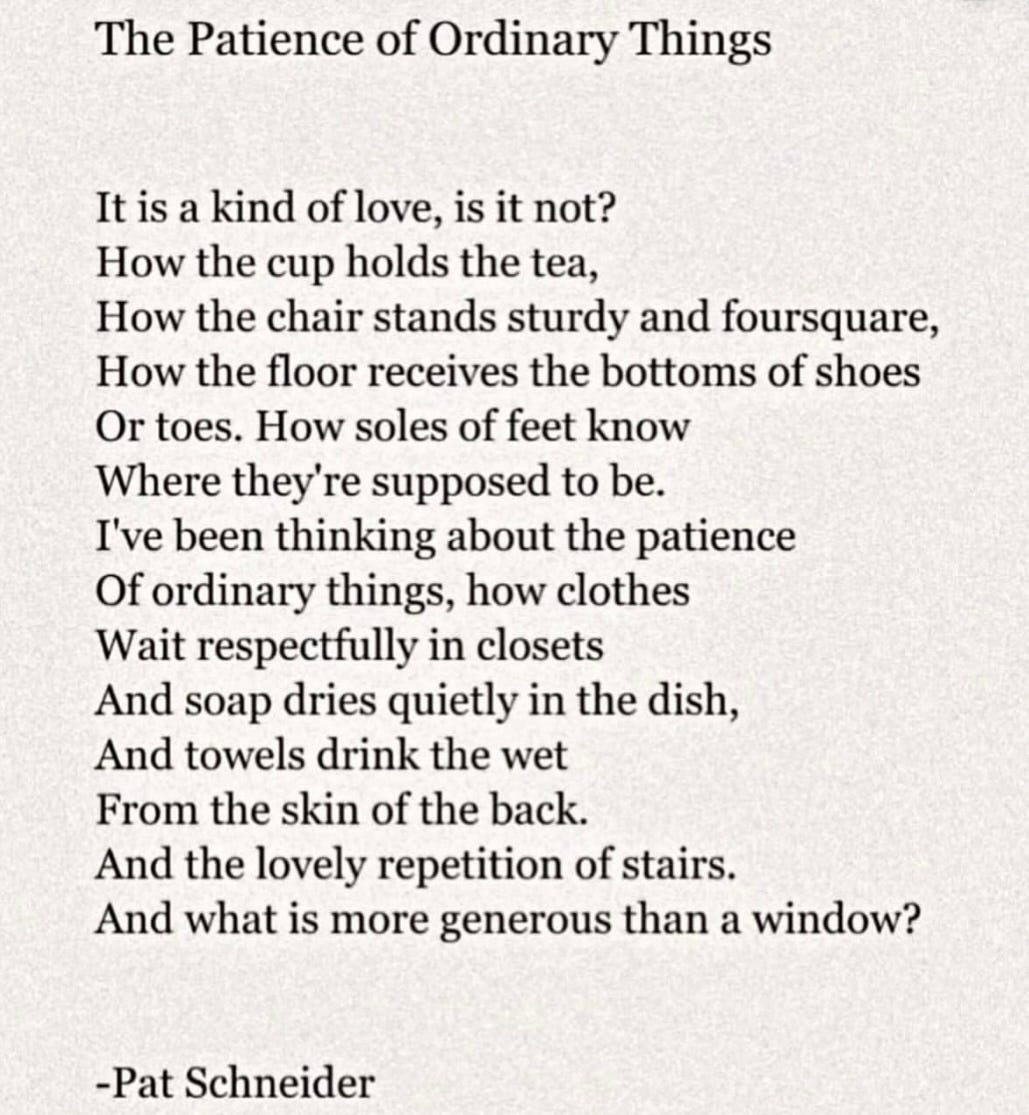
Paige: The reason I talk about mugs so much is that when I work with people, one-on-one, it’s the first thing they do in the morning: they have tea, coffee, or water. One thing that shaped this work is symbiosis. I’ve had periods in my life where I was struggling and noticed that I wasn’t treating the objects around me with as much respect. Where I’m rushing and I wasn’t slowing down and pausing with objects or the things around me, and I would notice the toll that would take on my emotional, mental, and spiritual health. When I’m doing the dishes, putting everything properly away, and slowing down, I notice how much that impacts everything in my life.
How do you work with so many different types of aesthetics?
Paige: Whether designing someone’s home, working with them somatically, or helping them to create these rituals. The root of my work is about helping people to reflect within themselves, in order to live with more presence and authenticity. It’s about stripping back the fluff to get to the root or essence of a person, so that they can feel more at home within themself, their space, their life. When I design spaces, it’s all about having the space be an expression of where the client wants to go in life — what they energetically want to shift and how they want to evolve while honoring their core self.
How is Object and Us informed by environmentalism or climate change?
Paige: So much of the original concept was about doing my part and being intentional about not consuming too much. Exploring the concepts of Object and Us was a threat to capitalism. If we slowed down and all engaged with our belongings and objects in this way, then we wouldn’t have this problem. It is foundational and fundamental to strip ourselves naked and come back and be in relativeness to our things.
If you would like to work with Paige and Object and Us follow here. Learn about Anna Sheffield’s The Objects here. Here’s hoping that you get to catch a future workshop with Anna and Paige, reach out to them if you have interest!